
Why I Closed My Dog Training Center (And Why Your Trainer Comes to You Now)
TL;DR: Earlier this year, I closed my indoor dog training center, Paws N’ Play, in River Park. This month, Daack Pack Dog Training announced its closure too. Here’s the honest, from-the-inside story of why indoor training facilities struggle in Sacramento — the rent, the retail math, the staffing treadmill — and why the training my clients were asking for all along happens at home. Training didn’t leave Sacramento. It just stopped hiding behind a lease.
This month, Sacramento learned that Daack Pack Dog Training is closing its doors. I’m not going to speak to their story — it’s theirs to tell, and they’ve told it. But it got me thinking it’s time to tell mine, because earlier this year I closed an indoor dog training center too. Mine was called Paws N’ Play, on Carlson Drive in River Park, and I want to be honest about what happened — because if you’ve ever wondered why Sacramento has almost no indoor training facilities, I can tell you exactly why. I lived it.
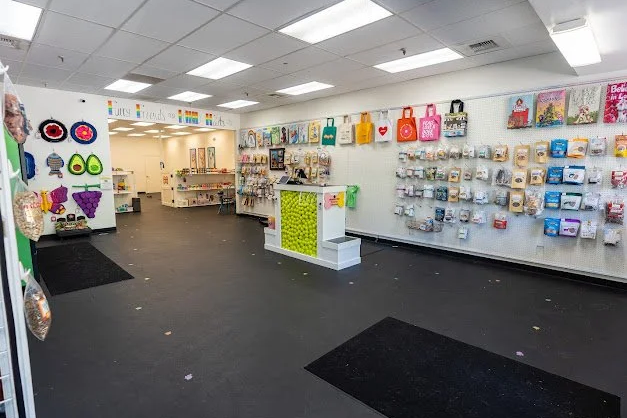
On paper, my business plan worked. Thirty-three hundred square feet in a nice neighborhood, a veterinarian on one side, a groomer on the other. Retail up front, dog washes, and real training space in back — because what’s the point of a training area the size of a postage stamp? Dogs need room. The open house was great. The community was great. The math was not.
The Math Nobody Tells You About
Start with rent: $6,500 a month before the lights were on. Then there’s the part nobody tells you about pet retail. Wholesale pricing comes in tiers, and the discount you get depends on how much you buy. A small shop like mine — I could only dedicate maybe 1,000 to 1,500 square feet to retail, because the training space was the whole point — sits in the smallest tier, paying the highest wholesale prices. Which means to make any margin, I’d have to price above Chewy and the big-box stores. Customers loved browsing. They bought online. I don’t blame them. The math blames the tiers.
The insider takeaway: Small pet retailers pay the highest wholesale prices in the industry. To compete with online giants on price, a small shop has to lose money on nearly every bag. That’s not a management problem — it’s the structure.
The Staffing Treadmill
Staffing was its own treadmill. I brought on staff the first year, and every pay period was a scramble. My trainers earned a real percentage of their sessions — they deserved it — but after their cut and the store’s bills, there wasn’t enough left for mine. I stopped taking training clients myself so I could run the store, which meant the thing I actually loved, and was actually good at, was the thing I never got to do.
The Question That Cracked It Open
And here’s the part that finally did it. Nearly every person who contacted us about training asked the same question: “Can you come to me?” Not “What are your class times.” Not “Where’s your facility.” Can you come to my house, my neighborhood, my real life — where the jumping and the barking and the leash chaos actually happen. And I couldn’t, because I was behind a register from open to close, six days a week, with deliveries landing on my day off. The demand for training was never the problem. The building was.
The real lesson: Your dog’s door dashing doesn’t happen in a facility. Their leash pulling doesn’t happen in a facility. Dogs learn where the behavior happens — and that’s your home, your sidewalk, your neighborhood. The training clients kept asking for was the training that actually works.
So I Closed the Building and Kept the Training
That’s what Wholistic Canine is: everything I learned from thirty-three hundred square feet, delivered to your living room, your sidewalk, your front door — where your dog actually lives, and where the L.E.G.S. of their real life (their Learning, Environment, Genetics, and Self) are actually in play. You can read more about how we work on our training methods page. It turns out the version of training my clients were asking for all along is also the version that lets a trainer survive in this town.
Indoor Training Isn’t Gone — Meet Elliotts Canine Collective
One more thing, because it matters: indoor training space isn’t gone from Sacramento. Rebecca Williams, who worked her butt off at Paws N’ Play and helped more than just about anyone, has opened Elliotts Canine Collective — an indoor facility with a focus on agility, plus classes and more. If your dog needs a job, a challenge, and room to fly over jumps, go see her. And if your dog needs help with real life at home — the door dashing, the leash pulling, the guest jumping — that’s exactly what we do, right where you live. You’ll find Rebecca and more trusted local pros on our Canine Community page.
Training didn’t leave Sacramento. It just stopped hiding behind a lease.
FAQ
Why did Paws N’ Play close?
The short version: the economics of running a combined retail and training facility in Sacramento didn’t work. High rent, wholesale pricing that puts small shops at the highest cost tier against online retailers, and staffing costs meant the numbers never added up — even with a supportive community. The training side of the business continues as Wholistic Canine — and we still train in River Park, right in your home.
Are there any indoor dog training facilities left in Sacramento?
Yes. Elliotts Canine Collective, opened by Rebecca Williams, is an indoor facility in Sacramento with a focus on agility, plus classes and more. You can find her at ecc.dog.
Does Wholistic Canine come to my home?
Yes — that’s the whole model. We’re a mobile, relationship-based training practice. We come to your home and neighborhood, where your dog’s real-life behaviors actually happen, serving Sacramento and the surrounding areas including Folsom, Carmichael, Fair Oaks, Citrus Heights, Rancho Cordova, and Arden-Arcade.
Is in-home dog training as effective as training at a facility?
For real-life behaviors, in-home training has a built-in advantage: your dog learns in the exact environment where the behavior happens. A dog who learns to settle at a facility still has to transfer that skill to your living room. A dog who learns to settle in your living room is already done. Facilities shine for things that need equipment and space — like agility — which is why we’re glad Sacramento still has one.
Want training that happens where your dog actually lives?
We come to you — Sacramento and surrounding areas.
Book a Free Intro CallOr call/text (916) 796-4925