

Calming Techniques for Dogs: Down the Vagus Nerve Rabbit Hole With a Very Happy Dog
What calming techniques actually work for dogs? The old ones: slow, gentle massage, sniffing, licking and chewing, predictable routines, calm handling, and teaching a slower breath. "Vagus nerve" products mostly rename these with a price tag. The real vagus nerve research is about implanted devices for epilepsy in dogs, not ear rubs or a "reset."
TL;DR: I’ve always thought the vagus nerve trend was a bunch of baloney. Then a client’s Springer Spaniel — a dog who goes 0 to 60 in pure happiness — sent me down the rabbit hole for real. Here’s what I found: the nerve is real, the research is narrower than the ads, and almost everything being sold is an old tool with a new name. I’m doing the homework anyway, out loud, mid-case. Comments are open. Talk to me.
It started at a brewery
Tuesday night, Balance Beerworks, 6:30. The place was basically ours — a few more people trickled in later, but it was perfect. Me, Sunny with her Dandie Dinmont Terrier, Jade with her Dachshund, and Jennifer with Poppy, her Springer Spaniel. The whole point of brewery class is simple: humans hang out and talk while the dogs learn to lay down, settle, and relax in the real world.
And while the dogs practiced relaxing, we talked about the one dog for whom relaxing is the hardest thing in the world.
Somewhere in that conversation — going through what we’ve worked on, where we are, and what out-of-the-box ideas might be left — I heard myself say “Vagus nerve.”
Which is funny. Because I think the vagus nerve trend is a bunch of baloney.
But I said it out loud, to a client, about a real dog. So now I have to do the homework.
Learning: years of practicing the 0-to-60 pattern, plus real training history: behavioral downs, relaxation work, and more.
Environment: bred in Georgia, purchased by a family in an apartment, surrendered to rescue when she was too much, now home with Jennifer in a busy multi-dog household.
Genetics: a hunting-line Springer Spaniel. This is a dog built to work, living as a companion.
Self: going on seven, her own individual wiring, and a medication history that tells us something about that wiring.
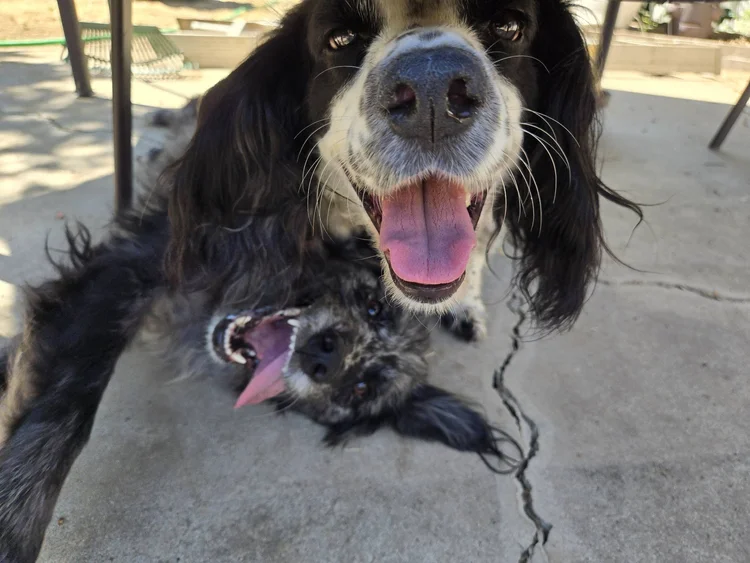
Meet Poppy
Poppy goes 0 to 60 in happiness.
She can do a beautiful behavioral down. Fully relaxed, heavy muscles, eyes closed, actually going to sleep. And the moment she wakes up? She springs into action — full speed ahead, happy tail flying, touch me, touch me, touch me. There is no middle gear. There’s asleep, and there’s sixty.
I like to say she’s got severe ADHD. That’s not a diagnosis — dogs don’t get that one — it’s just the fastest way to describe what living with her feels like. She’s so happy. And there is so much stress coming from all of her happy. That’s the part people miss: arousal is arousal, even when the tail is wagging.
Her mom, Jennifer, asked me a question at that table that I haven’t stopped thinking about: “I wonder if her brain is spinning like that all the time?”
Here’s what I told her. If it’s always been spinning, Poppy doesn’t know any different yet. Our job is to teach her what it feels like when her brain is NOT spinning — and then help her find her way back there. Again and again and again.
We just have to figure out what gets her there.
What we’ve already tried (this family has done the work)
I want to be clear about something before we get to the trendy stuff: Jennifer is not someone who skipped to the shiny object. This family has worked the ladder.
Poppy has a solid behavioral down — that protocol comes from Mark McCabe at Training Between the Ears (TBTE), and it’s a cornerstone of how I teach relaxation. We’ve done relaxation work beyond that. We’ve talked outlets, and Jennifer’s getting nose work started with Jade over at Mother of Dachshund Training.
And yes — medication, in partnership with Poppy’s veterinarian. A full Prozac trial, all the way to max dose: no real change. Gabapentin at 100mg: zonked her out completely, which is not the goal. The next conversation with her vet is about Zoloft, or something else that helps without sedating.
My take on behavior meds:
I’d rather not use meds. But I also believe a trial doesn’t hurt when it’s done right. Here’s my framework: we’re not looking for a sedative — we’re looking for something that helps a dog’s wiring actually learn how to come down and stabilize. You give it a fair trial, and within about six weeks you know if you’re seeing progress or not. And you’re looking for tiny bits of improvement, not a transformation. If you see nothing? Nothing. Okay, let’s not. If it helps, then down the road you come back off the meds and watch. If the problems creep back, that’s information too — something needs to adjust. Meds aren’t a reset button either. Nothing is. That’s kind of the theme of this whole post.
So that’s where we were sitting when “Vagus nerve” came out of my mouth. Because when a thorough family has worked the whole conventional ladder and the dog still has no middle gear, you start looking at the out-of-the-box shelf. And the loudest thing on that shelf right now has a nerve named after it.
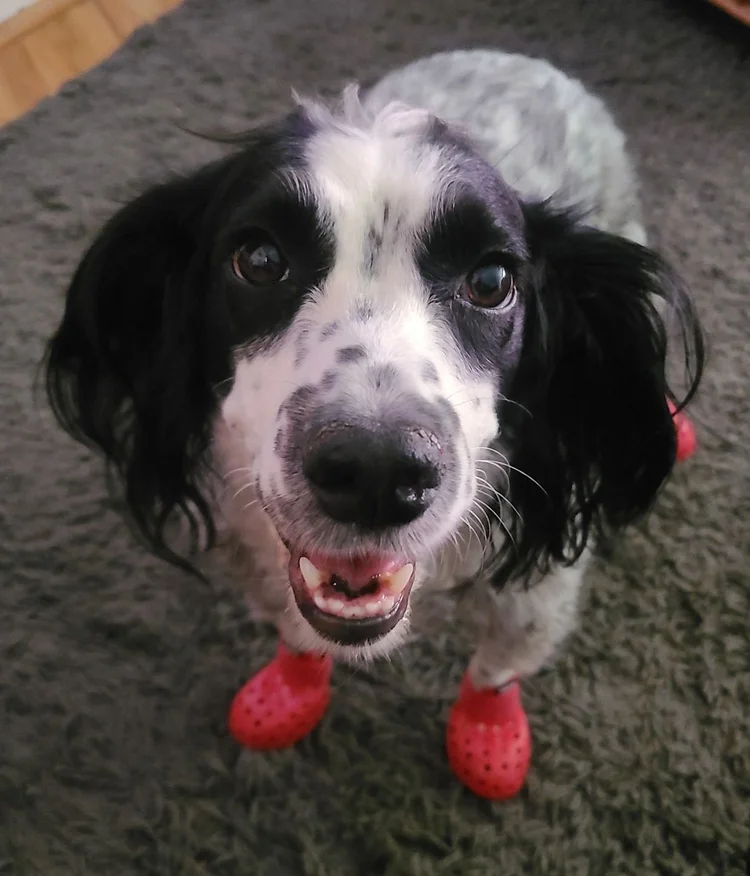
Down the rabbit hole
I am stuck in the vagus nerve algorithm. My phone is convinced I need my nerves toned. “The problem with your body could be your vagus nerve.” And they do it for dogs now too — those cheesy AI-generated ads. Every time I see one I think: this is dumb.
But now I’m literally looking at a case. So I dug in. Here’s what I actually found.
The nerve is real. The vagus nerve is the main highway of your dog’s “rest and digest” system — it runs from the brainstem through the neck into the chest and belly, and it’s part of how a body comes back down after stress. No argument there. That’s just anatomy.
The impressive research is not about ear rubs. The studies that get waved around — the ones with real results — are about surgically implanted electrical stimulators used for drug-resistant epilepsy in dogs. That is a genuine, narrow medical frontier. It has nothing to do with massaging your dog’s neck, rubbing their ears in circles, or a “reset” you can buy. There is no evidence that any consumer gadget or five-minute technique does for anxiety what an implanted device does for seizures. And here’s a trick to watch for: some articles quote those impressive seizure-device numbers, then pivot straight into massage tips — so the real research makes the ear rubs LOOK proven. Read closely. The proof belongs to the surgery, not the massage.
“Vagal tone” is the sales pitch. The pattern is always the same: your dog has “low vagal tone” (nobody measured anything), here’s a symptom list vague enough to fit every dog alive, and here’s the fix — a device, a protocol, a package. The invisible diagnosis is the product.
Calming Techniques for Dogs That Already Worked
And here’s the kicker: everything they’re selling already existed. Slow, gentle massage. Sniffing. Licking and chewing. Predictable routines. Calm handling. Teaching a dog to take a slower breath — veterinary behaviorist Dr. Karen Overall published relaxation and breathing protocols decades ago, free, no nerve branding required. TTouch has been doing gentle circular bodywork since the 1970s. The relaxation work I teach through TBTE covers this ground too. The trend didn’t discover anything. It renamed the oldest tools in the calm-dog toolbox and added a price tag.
- Slow, gentle massage
- Sniffing
- Licking and chewing
- Predictable routines
- Calm handling
- Teaching a dog to take a slower breath
So where does that leave a skeptic? Honestly: still mostly baloney. But the dog underneath the baloney is real. The calming practices work — they always worked — they just don’t need the nerve mythology or the merchandise. And the worst thing that happens if I dig deeper is that I help Jennifer help Poppy. I can live with that.
So here’s the plan
Massage is the piece Jennifer told me hasn’t gotten enough attention, so that’s getting picked up — real, slow, gentle massage homework, especially around Poppy’s wake-up transitions, since that’s exactly where her middle gear goes missing.
I’m going to actually learn Tellington TTouch instead of just nodding along when people mention it. I know OF it. Time to know it.
And I ordered a canine anatomy coloring book. I’m serious. I’m going to learn where the vagus nerve actually runs and where the claimed acupressure points sit — because I refuse to have opinions about a map I haven’t studied.
But here’s the most important part of the plan, and it has nothing to do with nerves: whatever we build has to fit what Jennifer can actually do. She is an amazing dog mom, and she is an exhausted one — multiple dogs with polar opposite needs, and only so many hours in a day. I can’t hand her an hour-by-hour schedule with firm rules and call it a plan. We have to figure out what works for the two of them together, as a team, without mom going under. A human only can do so much in a day. Any protocol that ignores that isn’t a plan. It’s homework guilt.
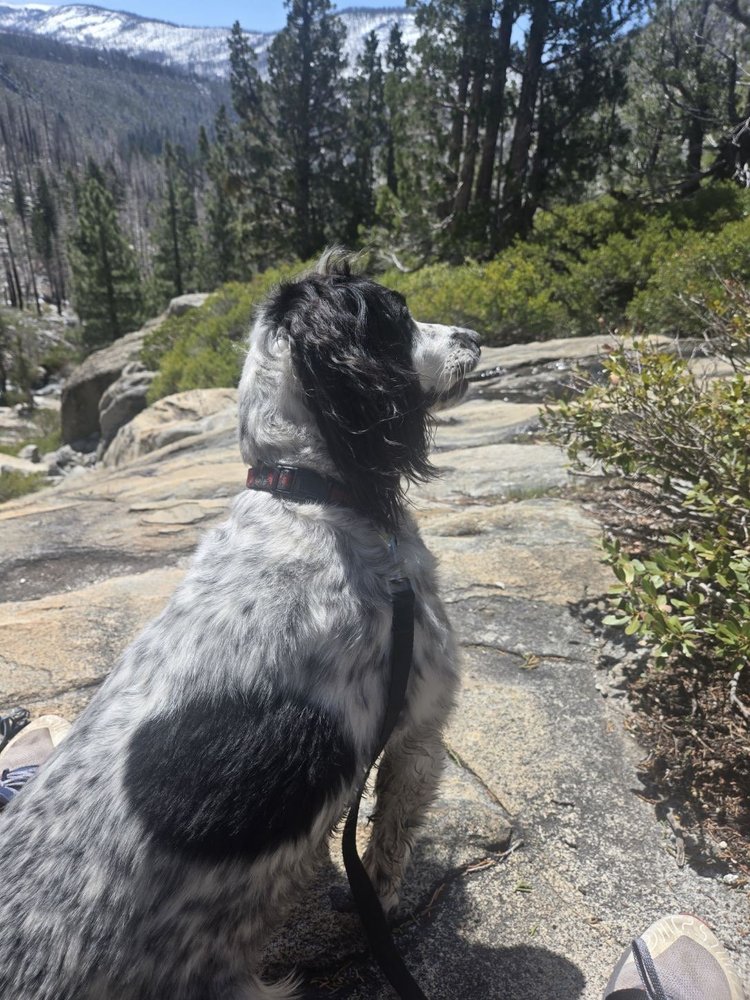
Hello, Internet world
This is what I do professionally, and I almost never talk publicly about a case while I’m in the middle of it. Today I am. This is me showing my work.
I’m on the opposite end of the spectrum from the posts you usually see. I don’t have a shut-down, fearful dog. I have a dog so darn happy she can’t come down — and I need to help her learn to self-regulate. I mean, come on, if this were a doodle we’d expect it. (Just kidding.) (Mostly.)
So: talk to me. If you have real experience with any of this — the bodywork, the breathing protocols, something from a background different than mine — I want to hear it. Confirm something. Deny something. Tell me about the thing I haven’t tried. Give me something.
Comments are open. I’ll leave them open.
(And if you’re curious about the TBTE course I mentioned to Jennifer — call me. I’d rather help you figure out if it’s right for you and your dog than drop a link and hope.)
Watch this space
This post is going to grow. I’ll report back on: what the comments bring in, my verdict on the acupressure map once I’ve actually colored it in, how the massage and TTouch work lands with Poppy, and honest progress reports — even if the honest report is “No change.” Especially then. That’s the whole point of Bark the Truth.
The rabbit hole, mapped — my actual research trail
I’m not asking you to take my word for any of this. Here’s everything I read, labeled honestly, from most grounded to most “watch your wallet.” Go down the hole yourself.
The real clinical tools (free, decades old):
Dr. Karen Overall’s Protocol for Relaxation
Dr. Karen Overall’s Protocol for Teaching Your Dog to Take a Deep Breath
Training Between the Ears — free Behavioral Down course
Tellington TTouch — official how-to
The actual vagus nerve research (note what it’s actually about — implanted devices and epilepsy, not massage):
Long-term outcomes of epileptic dogs with implanted vagus nerve stimulators
Case report: one year of vagus nerve stimulation in a dog with drug-resistant epilepsy
The honest takes:
Ask the Vet, Downeast Dog News: “Vagal Nerve Stimulation for the Dog”
Vetster: “Can a dog’s vagus nerve be reset to treat anxiety?”
Casa Luna Canines: stress science that’s actually useful
The middle of the spectrum (some good info, some overreach — read with your new skills):
Human Dog Harmony: “What Is the Vagus Nerve Training Protocol for Dogs and Is It New?”
Four Leg Rehab: manual massage for vagal stimulation — credentialed and careful in places, but notice how the implanted-device evidence sits next to the massage advice. Practice spotting it.
How it’s being sold (read these to recognize the pattern, not to follow the advice):
“The Role of the Vagus Nerve in Canine Calmness”
“How to Reset a Dog’s Vagus Nerve”
And out there in the wild: board-and-train programs now selling “vagus nerve training” as its own service — promising instant reductions in separation anxiety and reactivity. No link on purpose. If a trainer promises “instant,” that tells you everything you need to know.
FAQ: The Vagus Nerve and Calming Techniques for Dogs
What are the best calming techniques for dogs?
Can you “reset” your dog’s vagus nerve?
No. The nerve is real, but there’s no evidence for reset techniques or consumer gadgets treating canine anxiety. The genuine research is implanted devices for epilepsy — a medical treatment, not a wellness hack.
Does massage actually calm dogs?
Slow, gentle, predictable touch can absolutely help many dogs relax — that’s been true forever. It doesn’t need a nerve trend to justify it, and it isn’t a cure for anxiety or reactivity on its own.
Is “vagus nerve training” new?
No. Every technique sold under that name — massage, sniffing, licking, breathing work, calm routines — existed long before the trend, including Dr. Karen Overall’s decades-old relaxation protocols.
Should I try medication for my dog’s anxiety?
That’s a conversation for your veterinarian. What I can tell you as a trainer: done right, a med trial is information, not a life sentence — and the goal is a dog whose brain can learn to settle, not a sedated dog.
Got a dog with no middle gear?
Let’s figure out YOUR plan together — one that fits your real life, your real household, and your real energy. That’s the whole job. Most families start with a free intro call, then a Behavior Consultation in their own home.
Book a Free Intro CallOr text us at (916) 796-4925
Behavioral down and relaxation protocols credited to Mark McCabe, Training Between the Ears (TBTE). Relaxation and breathing protocols by Dr. Karen Overall. Tellington TTouch developed by Linda Tellington-Jones. L.E.G.S.® and Family Dog Mediation® created by Kim Brophey — familydogmediation.com. Wholistic Canine is a mobile, in-home dog training practice serving the Greater Sacramento area.

We tell it like it is