

How to Stop Puppy Biting (and Why It's Normal)
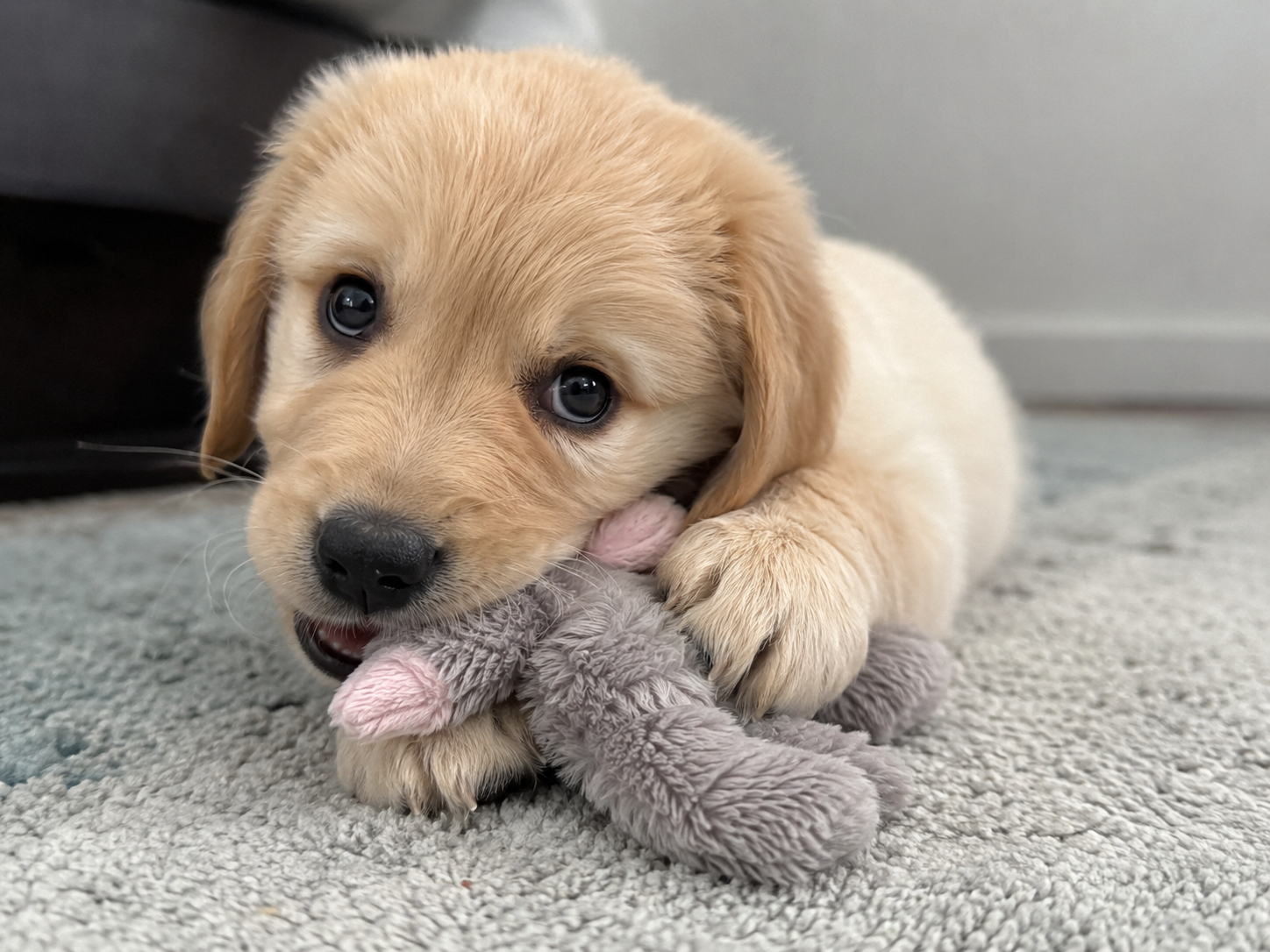
If you're reading this with a fresh set of teeth marks on your hand, take a breath. I'm going to tell you the thing nobody seems to say first: puppy biting is normal.
Yes. This is normal.
Your puppy biting everything is a baby putting everything in their mouth. That's it. That's what's happening. Before they came home to you, their mouth was the only tool they had to figure out the world — it's how they explored their littermates, their mom, their entire universe. Now you're the new world, and they're trying to figure you out the only way they know how.
So no, your puppy isn't broken. You didn't get the bad one. You got a baby.
But here's the turn, and it matters: we can't just let them keep practicing it. Every time a puppy gets to sink those needle teeth into a hand and have it work — get a reaction, get a game, get attention — they're learning that this is normal. That it's how we do things around here. So this is a big to-do from day one. Not because something's wrong, but because right now is when they're deciding what "normal" looks like.
What's Actually Driving the Puppy Biting
A few things, usually all at once:
Exploration. Like I said — the mouth is their hands. A rock, a stick, a porcupine, who knows. They're just checking.
You, accidentally. Here's the trap almost everyone falls into. Puppy grabs something they shouldn't, you make a big deal, you start chasing them — and now? Now it's super, super, super fun. You just turned "grab the thing" into the best game in the house. They will absolutely do it again.
Overtiredness. This is the big one people miss. An overtired puppy is exactly like a toddler who skipped their nap — cranky, whiny, grumpy, no filter, all raw-raws and chaos. And owners read that witching-hour biting as a behavior problem when really it's just a wrecked little baby who needs to sleep. When I see it, my whole read is: yeah, I think it's nap time, buddy.
No toy to play with. If you're playing with your puppy and you don't have a toy in your hand, all they have to work with is your skin. They aren't being bad — they literally don't know what else to do. Give them an object and suddenly they can figure out how to play with you, not on you.
IS puppy biting normal?
Yes — puppy biting is normal. Almost everything I just described is normal puppy stuff. But you should know where the line is.
What makes me pay attention isn't the biting — it's anger behind it. Here's the difference: say you give your puppy a fair warning, you scoop them up, and they flip a switch and escalate hard. That's not "ouch, my hand is a chew toy." That's something else, and it's worth a closer look — especially in a breed that's supposed to be soft and social. A squishy little retriever doing it reads differently than a guardian breed, and context matters.
A one-time thing can absolutely be a fluke. But either way, loop in your trainer. And if you don't have a trainer — you probably should. There's a lot working against a baby dog in our modern concrete jungle full of mini captive animals (that's a soapbox for another day).
I'll be honest with you about what the real version of "not normal" looks like, because I've seen it. I once went out to meet an eight-week-old Staffordshire Terrier — mom called because he was mouthy. But this wasn't mouthy. If you reached for his collar or went to pick him up, he flipped a switch and was out to put holes in a person. Not puppy biting. At eight weeks old, in a breed that is supposed to be deeply people-social, with other dogs and kids in the home, that level of neurotic, choose-violence behavior is a genuine concern. We had to have the hard conversation about returning him.
I tell you that not to scare you — but so you can see the difference. For the vast majority of you reading this, your puppy is a perfectly normal little land shark. That's the whole point.
So how do we get through the puppy biting?
Treat it like a stage, because that's what it is. It is not forever. Here's the shape of it:
Manage the environment and prevent the bites. The fewer times they get to practice it, the faster it fades. Set them up so the wrong thing isn't even an option.
Build a real routine. Naps, feeding, training, socialization, exercise — put enough good stuff in their day that they're almost too tired to be bitey. A busy, well-rested puppy is a much easier puppy. The over-bitey ones are very often the under-rested ones.
Learn to read it. Within about two or three weeks, you should be getting genuinely good at this — seeing the bite coming, reaching for the toy, calling the nap before the meltdown. There's a learning curve, but it's a short one. Honestly, the sooner you can learn it, the better. This is going to be your biggest puppy challenge, so let's rise to the occasion.
When to call — and I mean it
If you're a few weeks in and still finding your footing, that's normal. Keep going.
But if you're in Sacramento and your puppy is six or seven months old and still biting like this? You need to be calling today. Right now. This has been going on way too long — by now it should have clicked weeks ago, and the longer it runs, the more "normal" it's become for them.
This is the hardest part of raising a puppy, and it's also the most worth getting right. When you're ready for the hands-on work — how to actually do the redirecting, the management, the routine — that's what our Sacramento puppy training program is for. Come find me there. We'll get through it together.
Puppy Biting FAQs
At what age do puppies stop biting? Most puppies grow out of the worst biting between 4 and 6 months, as their adult teeth come in and they learn better ways to interact — if they're being guided through it. If your puppy is 6–7 months or older and still biting hard, that's a sign it's gone on too long and it's time to get help.
Is puppy biting a sign of aggression? Almost never. For the vast majority of puppies, biting is normal exploration and play — they're using their mouth the way a baby uses their hands. True aggression is rare and usually comes with anger behind the bite, not just mouthiness. If something feels off, loop in a trainer.
How do I stop my puppy from biting me? Manage the environment so they get fewer chances to practice it, always have a toy on hand so they're biting the toy and not your skin, build a solid routine with enough naps (overtired puppies bite more), and learn to read the early signs so you can redirect before it starts.
Why does my puppy bite more at night? That's usually an overtired puppy — like a toddler who skipped a nap. The "witching hour" biting is often a signal it's time for sleep, not a behavior problem.
When should I call a trainer about puppy biting? If you're a few weeks in and still finding your footing, that's normal — keep going. But if your puppy is 6–7 months old and still biting like this, call now. The longer it runs, the more "normal" it becomes for them.