

Where Should Your Dog Stay While You're on Vacation? A Sacramento Dog Boarding Guide
Quick Answer
Dog boarding in Sacramento costs an average of $40–$60 per night at traditional kennels, with premium suites running up to $130 and holiday surcharges on top. Your main options are large facilities like Wag Hotels, Folsom Dog Resort, The Local Bark, and Animal Den Pet Resort — or in-home boarding, where your dog stays in a trainer's home instead of a kennel run. Wholistic Canine offers in-home dog boarding in Sacramento for $85/night flat, with no more than 4 dogs at a time, individualized care included, and optional board-and-train programs for dogs staying two weeks or longer.
At a glance:
- Average Sacramento kennel: $40–$60/night + add-on fees
- Our in-home boarding: $85/night, all-inclusive, open to all dogs
- Small group: never more than 4 dogs (vs. 100+ kennel runs)
- Not social with other dogs? Welcome — kept safely separated
- Add training: 2-week minimum board & train
- Required everywhere: rabies + communal illness vaccines
The flights are booked. The hotel is confirmed. And then it hits you: What about the dog?
For a lot of families, figuring out where their dog will stay is the most stressful part of planning a vacation. You want somewhere safe, somewhere your dog will actually be cared for — not just housed — and ideally somewhere they'll come home from with their manners still intact.
We put this guide together to walk you through your boarding options in the Sacramento area, the questions we'd ask any facility before handing over a leash, and how our own in-home boarding works — because the more you know, the better the choice you'll make for your dog.
Your Dog Boarding Options in Sacramento
Sacramento has several well-established boarding facilities, and depending on your dog, one of them may be a good fit:
Wag Hotels (West Sacramento)
The area's best-known "dog hotel," with more than 160 private boarding rooms, indoor play areas, a pool, grooming, and 24/7 staffing. Room tiers range from basic kennels to suites, with pricing that has run roughly $40–$130 per night depending on the room and add-ons.
Folsom Dog Resort & Training Center (Folsom)
A 12,000-square-foot facility with climate-controlled rooms, group play yards, a doggie water park, and on-site training. Published rates have ranged from about $63–$91 per night for one dog depending on room tier.
The Local Bark (Rancho Cordova)
An upscale resort with boarding, daycare, and training roots going back to 2001. Rates aren't published online, so plan to call for current pricing.
Animal Den Pet Resort (Sacramento)
A neighborhood fixture for nearly 40 years, offering boarding, daycare, and grooming, plus a members-only private dog park.
Across the Sacramento area, traditional boarding averages roughly $40–$60 per night, with holiday surcharges and add-on fees (extra play sessions, tuck-ins, solo housing) on top at many facilities. A week of boarding typically lands around $385–$400 before extras.
Rates listed here were current as of August 2026 — check directly with each facility before booking.
The Questions We'd Ask Any Boarding Facility
Whether you're touring a big facility or interviewing an in-home boarder, our Canine Relationship Coach Alex — who handles all of our boarding — recommends asking three things before you book:
1What are your sanitation protocols?
Anywhere dogs gather, cleanliness is the front line against communal illness. A good facility will answer this without hesitating.
2How do you handle emergencies?
Who's watching overnight? Which vet do they use? How fast can they get a dog there?
3Can your staff read dog body language?
This is the one most people never think to ask. Dogs in group settings have disagreements — the difference between a non-event and an injury is a human who can see tension building and calmly de-escalate it before it boils over.
Also ask what's included in the nightly rate. At many facilities, playtime, extra potty breaks, and one-on-one attention are add-ons, and the bill can grow quickly.
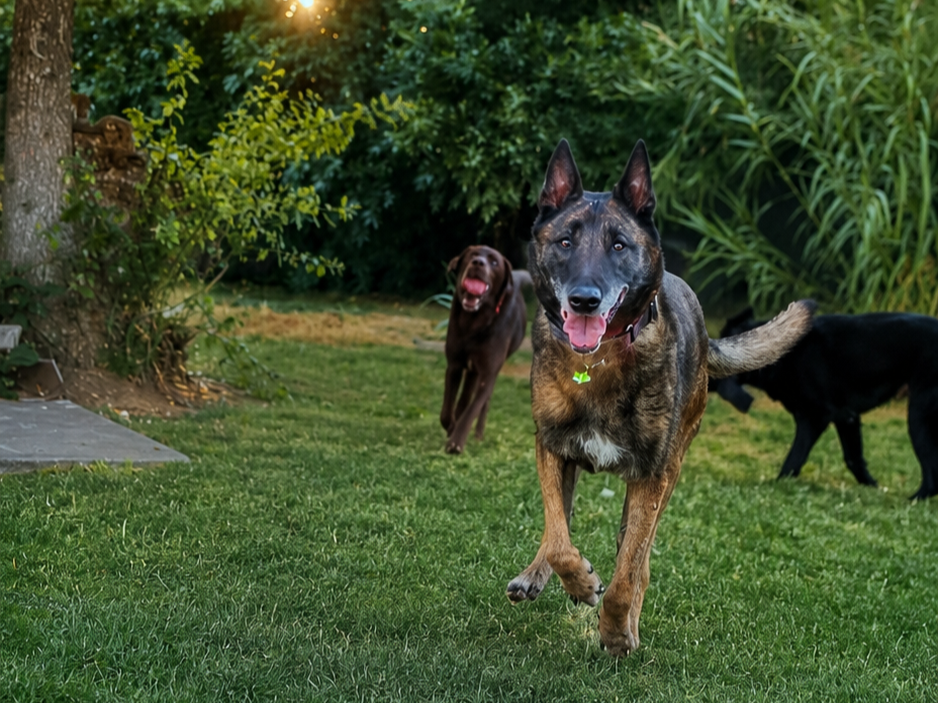
Alex’s back yard with her adopted senior dog and boarding dogs
A whole-dog note
When we look at any dog, we consider four things: Learning, Environment, Genetics, and Self — the L.E.G.S.® framework developed by Kim Brophey. Boarding changes one of those four overnight. A dog who's easy at home can look like a different dog in a strange place with strange smells and strange dogs, and that's not a training failure — it's environment doing exactly what environment does. It's why we think hard about where a dog stays, not just who watches them.
What Makes In-Home Boarding Different?
In-home boarding means exactly what it sounds like: instead of a kennel run in a large facility, your dog stays in a trainer's actual home.
Our in-home boarding is run by Alex, our Canine Relationship Coach, who has been training dogs for more than 12 years, hosts over 100 boarding dogs a year, and holds a perfect 5.0-star rating across nearly 300 reviews. In her words, the biggest difference is stress. With only 4 dogs at a time — versus a facility housing dozens or more — there's no wall of barking around the clock. Every dog gets individual care instead of being one of many, and they get to feel like dogs who are part of a home: relaxing inside the house, and even on the sofa, if that's allowed at your house.
Why trainers board their dogs here
Alex is also a regional IGP competitor — a sport that demands reading canine body language and building a working relationship at a level most pet owners never need.
Here's the part that tells you the most: other trainers board their dogs with her.
Alex keeps Terra's own two dogs when she travels — a fourteen-year-old senior and a young dog in training as a demo dog. She boards working dogs she's trained alongside. When a fellow trainer in our circle leaves town, their dog stays with Alex.
That's not a small thing. Trainers know what handling actually looks like, and we're the pickiest clients there are — especially with a demo dog or a working dog, where one stressful stay can undo months of work.
And the honest flip side: most boarding facilities are staffed by people who are learning. That's not an insult; everyone starts somewhere. But they're learning on your dog. If you've got a bubbly golden retriever who's never met a stranger and nothing rattles, that's genuinely fine — a good kennel will do right by them. The dogs who need experienced hands are the anxious ones, the reactive ones, the seniors, the ones on medication, the ones mid-training. Those dogs shouldn't be someone's first week on the job.
Here's how a stay with us works:
Days are tailored to each dog. There's no rigid facility schedule, because what works for one dog doesn't work for another. Social dogs get multiple play turnouts with groups matched by size, play style, and energy level. Dogs who don't love other dogs are kept safely separated — we never force group play. Shy dogs get a day to settle in before meeting anyone. Training alumni dogs even get outings.
Your dog's routine comes with them. Meals and medications stay on your dog's normal schedule, and any cues your dog knows from home don't change. We're early risers, so dogs get maximum daylight for the fun stuff — and everyone turns in early for deep, restful sleep in a crate at night.
Manners don't take a vacation. House rules apply to every guest: no bullying in the play yard, no excessive barking, no feet on counters. For dogs who've been through our training programs, that structure means they fall right back into their good habits the moment they arrive.
You stay in the loop. Short stays get daily updates; longer stays get updates every other day, so you can enjoy your trip knowing exactly how your dog is doing.
Is In-Home Boarding Better Than a Kennel?
Neither is universally better — they're built for different dogs. Here's the honest tradeoff:
| Large facility | In-home with a trainer | |
|---|---|---|
| Dogs on site | Dozens to 100+ | Never more than 4 |
| Typical cost | $40–$60/night + add-ons | $85/night, all-inclusive |
| Schedule | Facility-wide routine | Built around your dog |
| Dogs who dislike other dogs | Often declined or isolated | Welcome, safely separated |
| Training carried over | Rarely | House rules apply to every guest |
| Best for | Social, easygoing, resilient dogs | Dogs who need quiet or individual attention |
A confident, social dog often does fine in a busy facility. A dog who's shy, selective about other dogs, or easily overwhelmed usually does better in a home.
$85 per night
Individualized care included — no add-on fees for playtime or tuck-ins. Holiday pricing noted below.
See in-home boarding details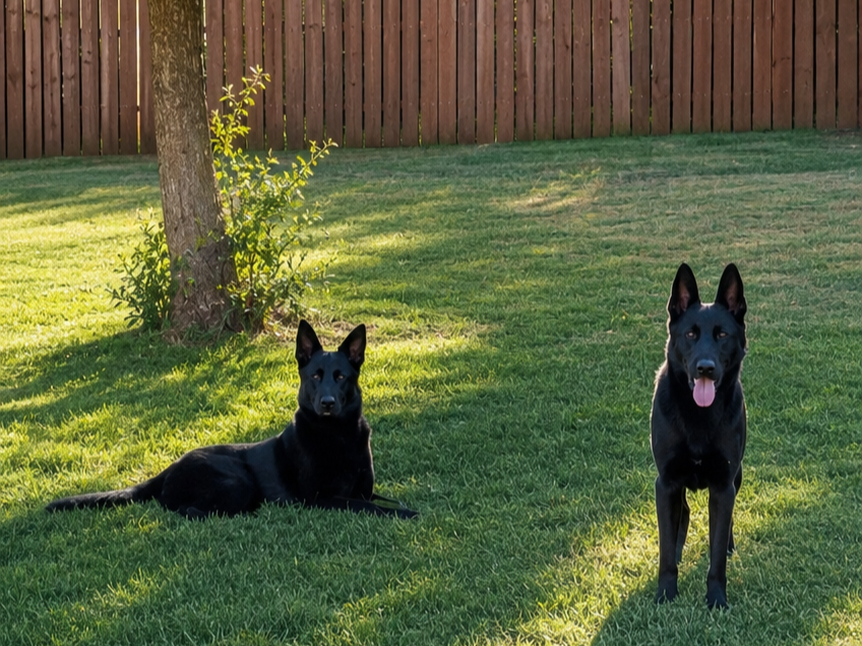
Want Your Dog to Come Home Better Than You Left Them?
Here's something most kennels can't offer: your vacation can double as your dog's training immersion.
With a two-week minimum stay, your dog can join one of our board-and-train immersion programs. Two weeks is enough to make real progress on a focused set of skills — leash manners, threshold manners (no more door-dashing), and holding a duration sit or down. It's designed to refine skills your dog already has, or build a few key behaviors they're missing.
Straight talk
Because we believe in honesty over sales pitches: two weeks is not enough time to resolve reactivity — whether it comes from over-excitement, fear, or aggression. Anyone who promises to fix reactivity in a two-week board isn't being straight with you. Those dogs need a longer program and ongoing coaching, and we're happy to talk through what that actually looks like. Learn more on our board and train page.
Boarding Tips From a Trainer
Keep drop-off quick. It feels kinder to linger and comfort an anxious dog, but it's actually the opposite — anxious dogs escalate the longer the goodbye lasts. A fast, confident handoff is the easiest start to a great stay.
Bag food by meal. Pre-portioned meals keep your dog's feeding exactly as it is at home.
Have vaccine records ready. Any reputable boarding situation — kennel or in-home — will require proof of rabies (it's the law) plus current vaccines for communal illnesses.
Book holidays absurdly early. County code caps in-home boarding at four dogs, so there are only ever four spots — not four per room, four total. Our regular clients typically book the following year's holidays before the current year's are even over. Every boarding option in Sacramento fills around summer break, Thanksgiving, and December, but in-home fills first. Months ahead is normal; weeks ahead is usually too late.
Holiday pricing, plainly
Boarding-only stays over major holidays may carry a surcharge, up to $150 per night at the high end. Regular clients keep a consistent rate. For a dog we haven't met yet, booking a holiday week is a conversation — those are our busiest and most limited days, and we want to be sure it's a good fit before we commit the spot. Dogs enrolled in a board-and-train program don't pay a holiday surcharge.
Either way, you'll know the number before you book. We don't do surprise line items.
The Bottom Line
There's no single right answer for every dog. A social, easygoing dog may do great at a large facility. But if your dog does best with individual attention, a calm environment, and a human who speaks dog — or if you'd love them to keep (or gain) good manners while you're away — in-home boarding with a trainer is worth a serious look.
Common Questions About Dog Boarding in Sacramento
How much does dog boarding cost in Sacramento?
Traditional kennel boarding in Sacramento averages $40–$60 per night, with premium suites reaching $130 and holiday surcharges on top. Add-on fees for playtime, extra potty breaks, and solo housing are common. A week typically runs $385–$400 before extras. Our in-home boarding is $85 per night, all-inclusive.
What is in-home dog boarding?
In-home dog boarding means your dog stays in a caretaker's actual house rather than a kennel run at a commercial facility. Group sizes are small, routines are individualized, and dogs live inside the home. With a trainer, house manners are also maintained throughout the stay.
Can my dog train while boarding?
Yes. With a two-week minimum stay, dogs can join a board-and-train immersion program covering leash manners, threshold manners, and duration sit or down. Two weeks is not enough time to resolve reactivity — those dogs need a longer program with ongoing coaching.
What do I need to bring for a boarding stay?
Bring pre-portioned meals bagged individually, any medications with dosing instructions, and proof of current vaccines. Rabies vaccination is required by law, plus current vaccines for communal illnesses. Familiar bedding or a favorite toy can help a nervous dog settle in.
A friend to your furry family,
The Wholistic Canine Team